

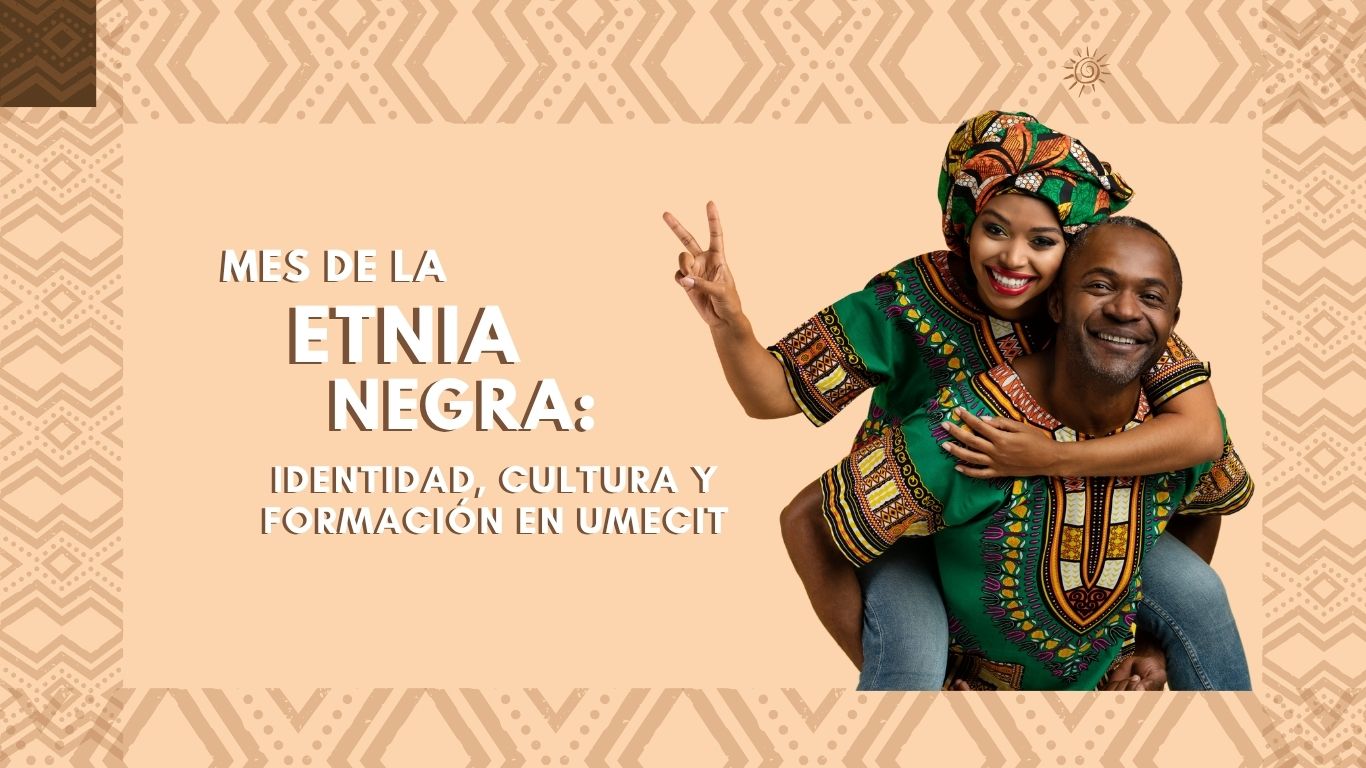
Black History Month 2026: Identity, Culture and Education at UMECIT
The Metropolitan University of Education, Science and Technology -UMECIT- commemorates Black Ethnicity Month through an institutional agenda that integrates academic, cultural and participatory spaces, oriented towards the recognition and appreciation of the Afro-descendant contribution in Panama.
It's not just a color. It's identity, history, and cultural heritage that unites us as a society.
As part of this recognition, it is important to consider the historical background that has led to this commemoration.
May 30th was declared in Panama as Black Ethnicity Day through Law 9 of 2000, as official recognition of the contribution of the Afro-descendant population in the construction of the country.
The Afro-descendant presence in Panama dates back to the 16th century, with their participation in key historical processes such as the development of trade routes and, later, in the construction of the Panama Railroad and Canal. This legacy forms part of the country's cultural, social, and educational identity.
Afro-descendant cultural expressions, such as music, dance, gastronomy, the use of the turban, the Kufi (cofi) and practices associated with hair care, constitute living manifestations of a heritage that has been transmitted from generation to generation.
Recognizing this history is part of comprehensive university training and the institutional commitment to inclusive education.
Institutional Agenda
- Tuesday, May 19, 2026
National Day: Wear your turban or Kufi (cofi) with pride.
The entire university community is invited to join in this cultural expression, which represents identity, history and deep roots in the Afro-descendant tradition. - Wednesday, May 20, 2026
Day: Wear your braids or natural style with your own identity.
A space to recognize Afro hair as a symbol of cultural heritage, identity, and expression. - Thursday, May 21, 2026
Institutional Forum: Roots and Routes.
Academic meeting focused on reflection on Afro-descendant identity, its contributions and its relevance in today's society. - Friday, May 22, 2026
Turban and headdress workshop.
Educational space to learn about the cultural meaning and techniques of use. - Saturday, May 23, 2026
Afro hair care workshop.
Activity aimed at the recognition, care and appreciation of Afro-descendant hair as part of cultural identity. - Thursday, May 28, 2026
Visit to the Afro-Antillean Museum of Panama.
Cultural experience aimed at recognizing the historical legacy of Afro-descendants in the country. - Saturday, May 30, 2026 Grand National Closing.
The closing day will integrate cultural and participatory activities at the national level, including the reign of the Black Ethnicity, the Afro-descendant cultural bazaar and artistic presentations that represent the Afro cultural richness.
Participation in the reign
To participate in the Black Ethnicity pageant (queen and king), you must contact your career coordinator and/or campus, who will provide you with the corresponding information about the selection process and participation of queen and king by faculty.
Inscription
If you would like to participate in any of the scheduled activities, we invite you to register using the button below to obtain more information and secure your participation:
Once your registration is complete, you will receive details regarding the selected activities at least 48 hours prior to their taking place.
We appreciate you registering in advance to facilitate organization and guarantee your participation.
This is an initiative of the University Welfare Program, from the Inclusive Education Program, in collaborative work with the Academic Directorate, the Human Talent Management Directorate and the University Extension and Social Linkage Directorate, as part of the transversal approach that is developed for the benefit of the university community.
History unites us in this melting pot of cultures. It's not just a color; it's the identity of generations, a blend of cultures, songs, faith, and traditions that form part of our society.
Recognizing this also means training professionals with awareness, respect, and a sense of belonging.