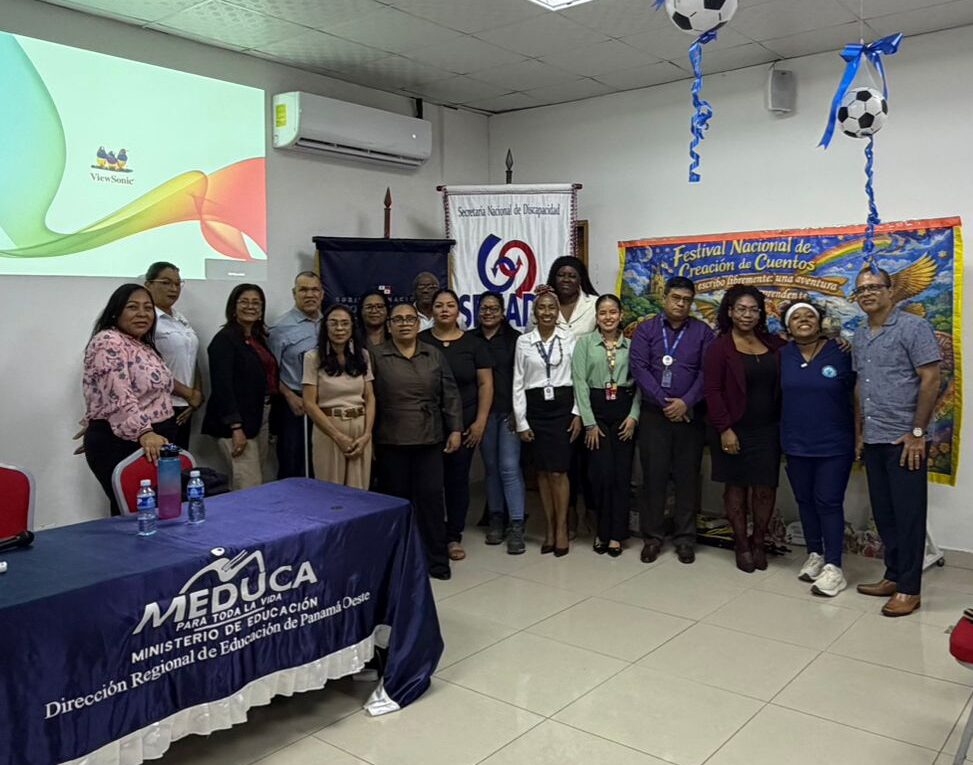
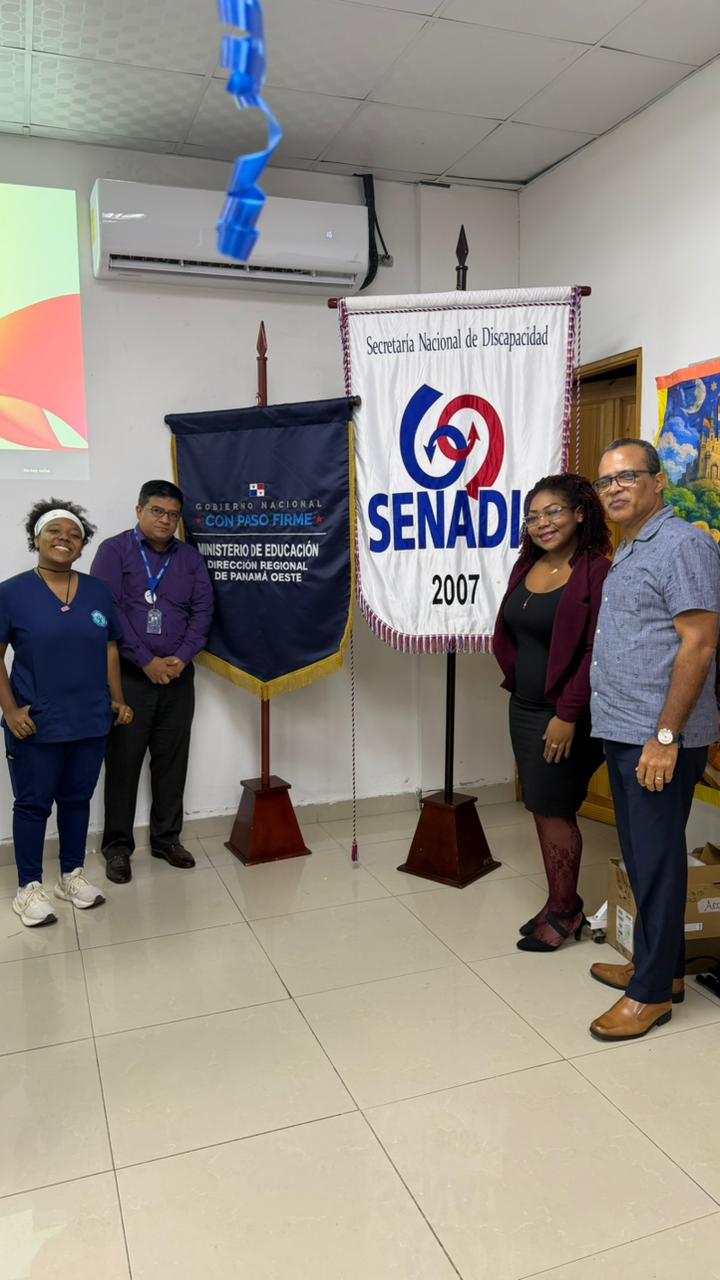
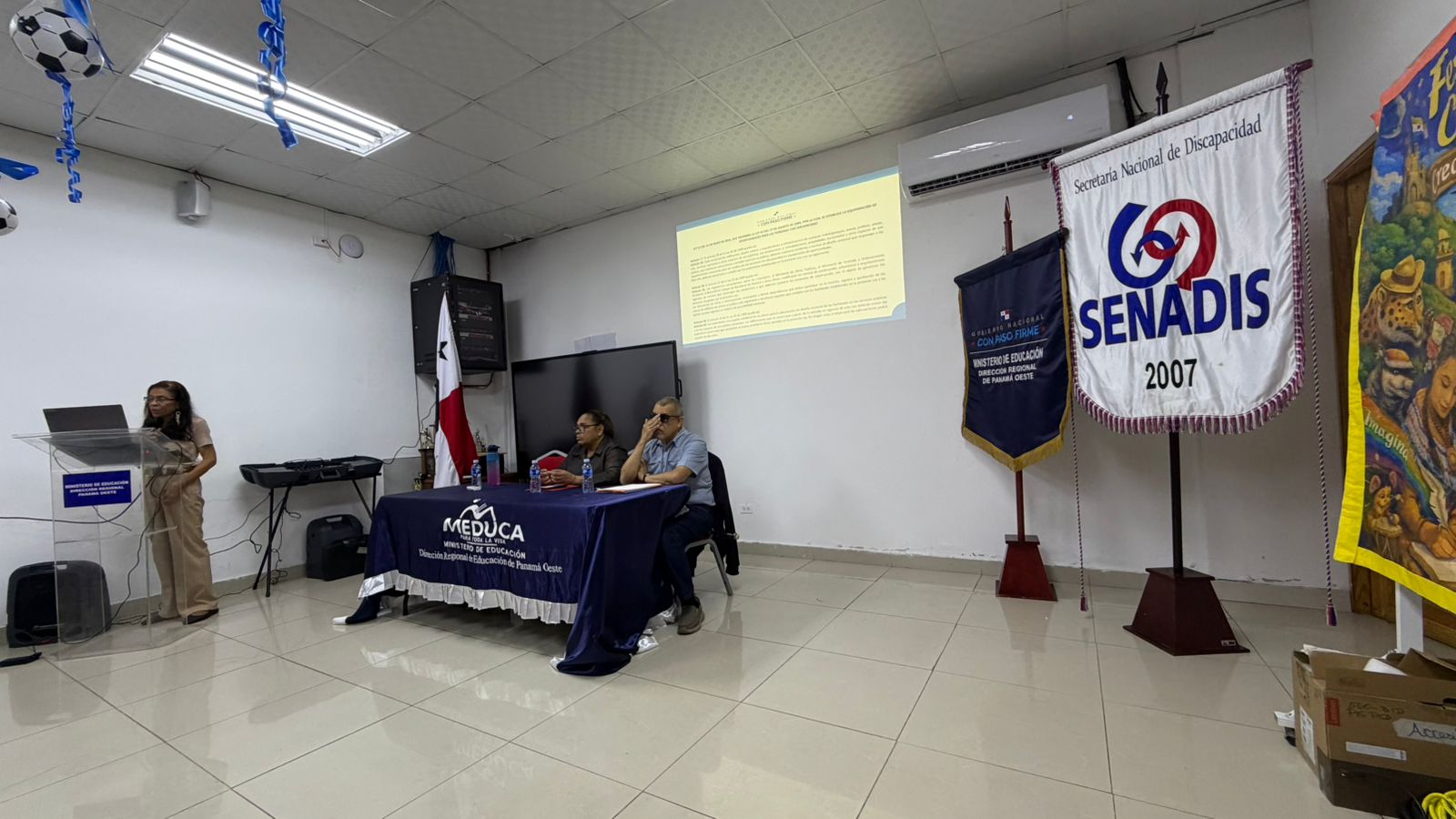
As part of its commitment to promoting inclusion and social responsibility, UMECIT participated in the awareness day organized by the Panama West Regional Office of the National Secretariat for Disability (SENADIS), under the theme «"Universal Accessibility: Accessible Spaces for People with Disabilities"», an event that included the presentation of Access Manual for People with Disabilities in Panama.
During the event, universal accessibility specialists conducted a workshop focused on the importance of designing and adapting accessible spaces that guarantee the participation of all people on equal terms. Additionally, the Access Manual for People with Disabilities was presented, a presentation led by a specialist with a visual impairment, who shared his experience and emphasized the need to strengthen a culture of inclusion, respect, and the elimination of barriers that limit the full participation of people with disabilities.
The event brought together representatives from public institutions, organizations and universities, promoting a space for the exchange of experiences, best practices and strategies to strengthen inclusion policies in the educational, social and institutional spheres.
Representing UMECIT were volunteer student Henyi Edghill, from the Psychology program; Research Coordinator Osvaldo Blackman; Professor Ariadna Berguido, from the Psychology program; and Alexis Del Cid, Coordinator of Extension at the La Chorrera campus, who attended as the institutional liaison. This participation was supported by the campus coordinator, Ernesto Martínez, reaffirming the University's commitment to developing initiatives that promote inclusion and equity.
Universal accessibility is an essential principle for ensuring equal opportunities and the full participation of all people, regardless of their physical, sensory, cognitive, or psychosocial conditions. In the university context, this approach promotes the elimination of architectural, technological, communicational, and attitudinal barriers, fostering inclusive and high-quality higher education.