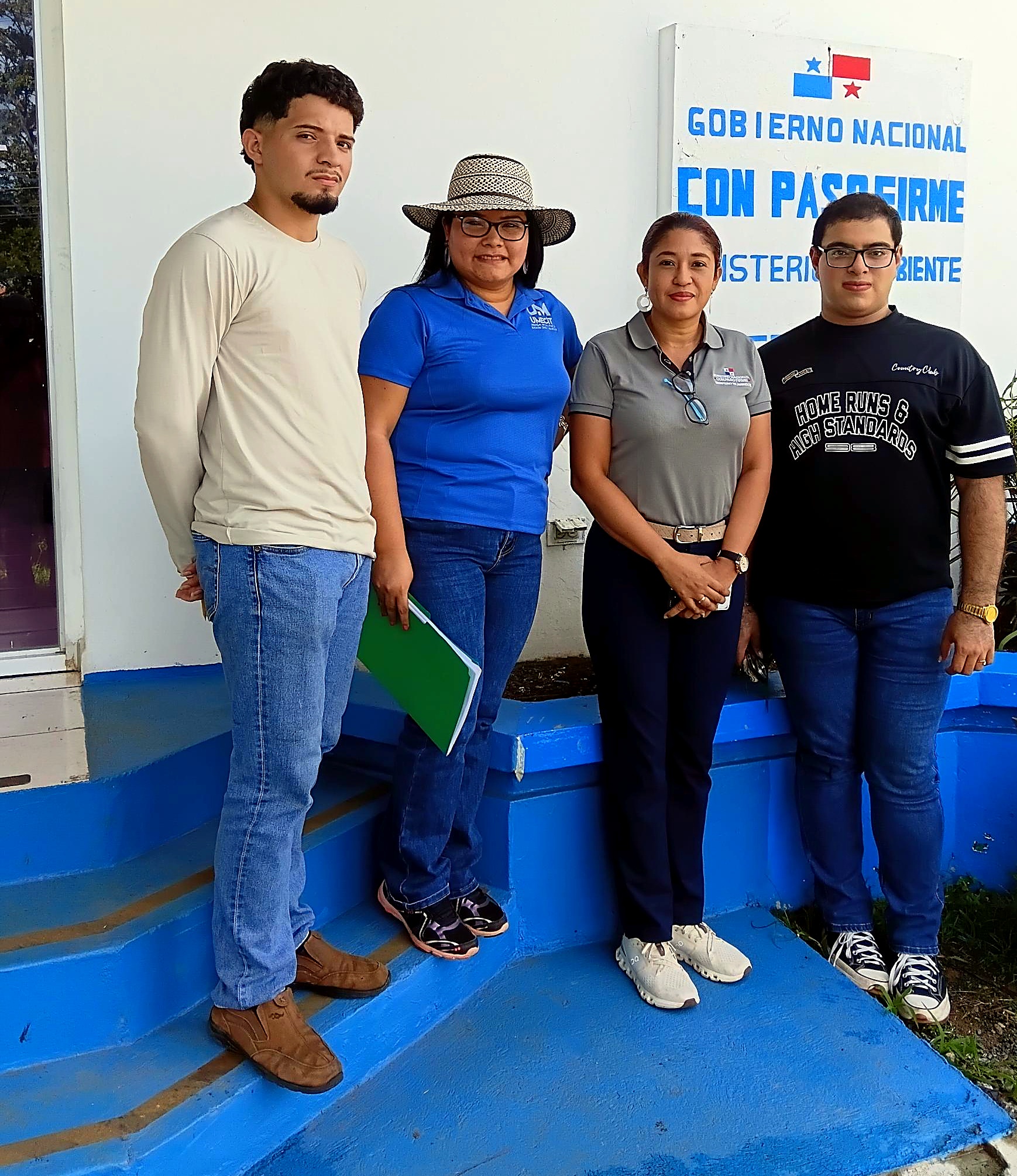
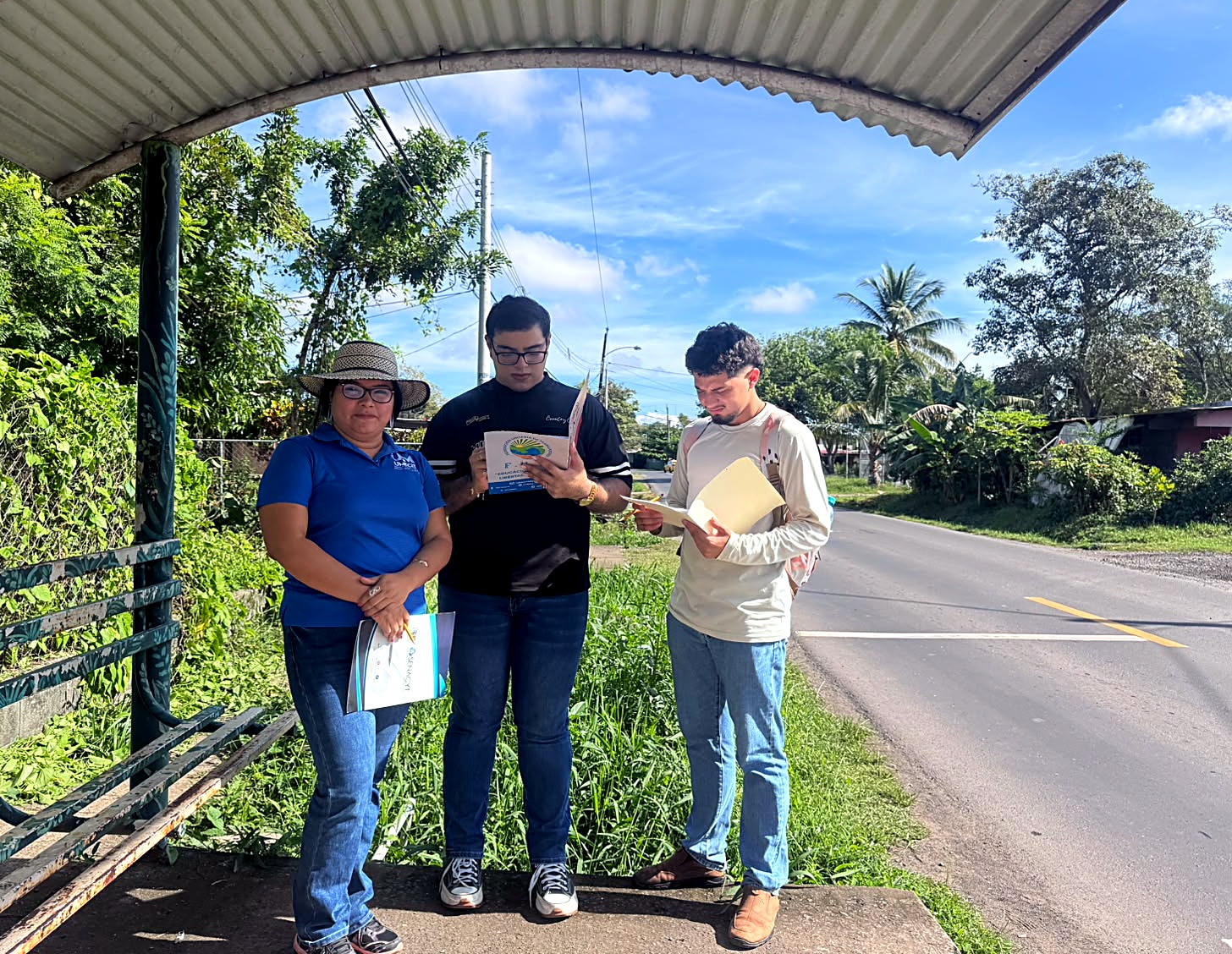
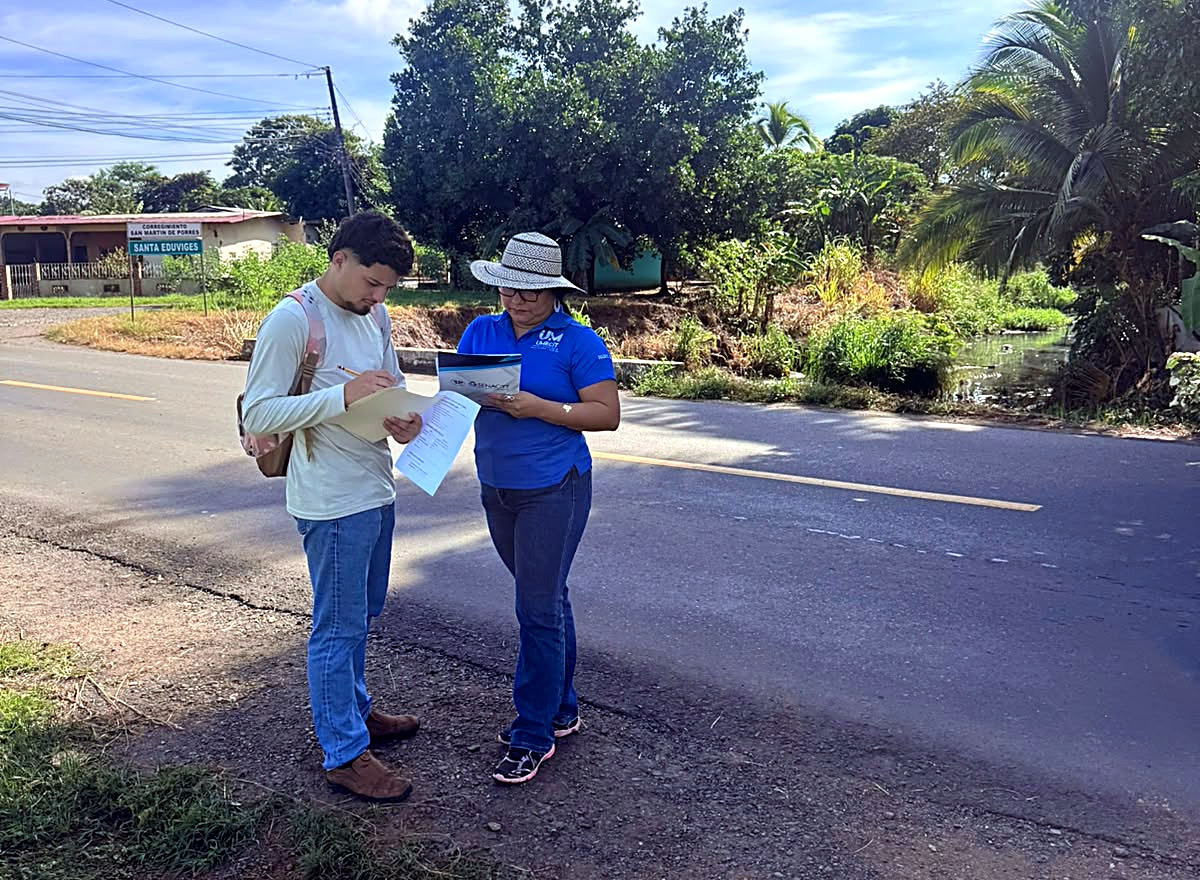
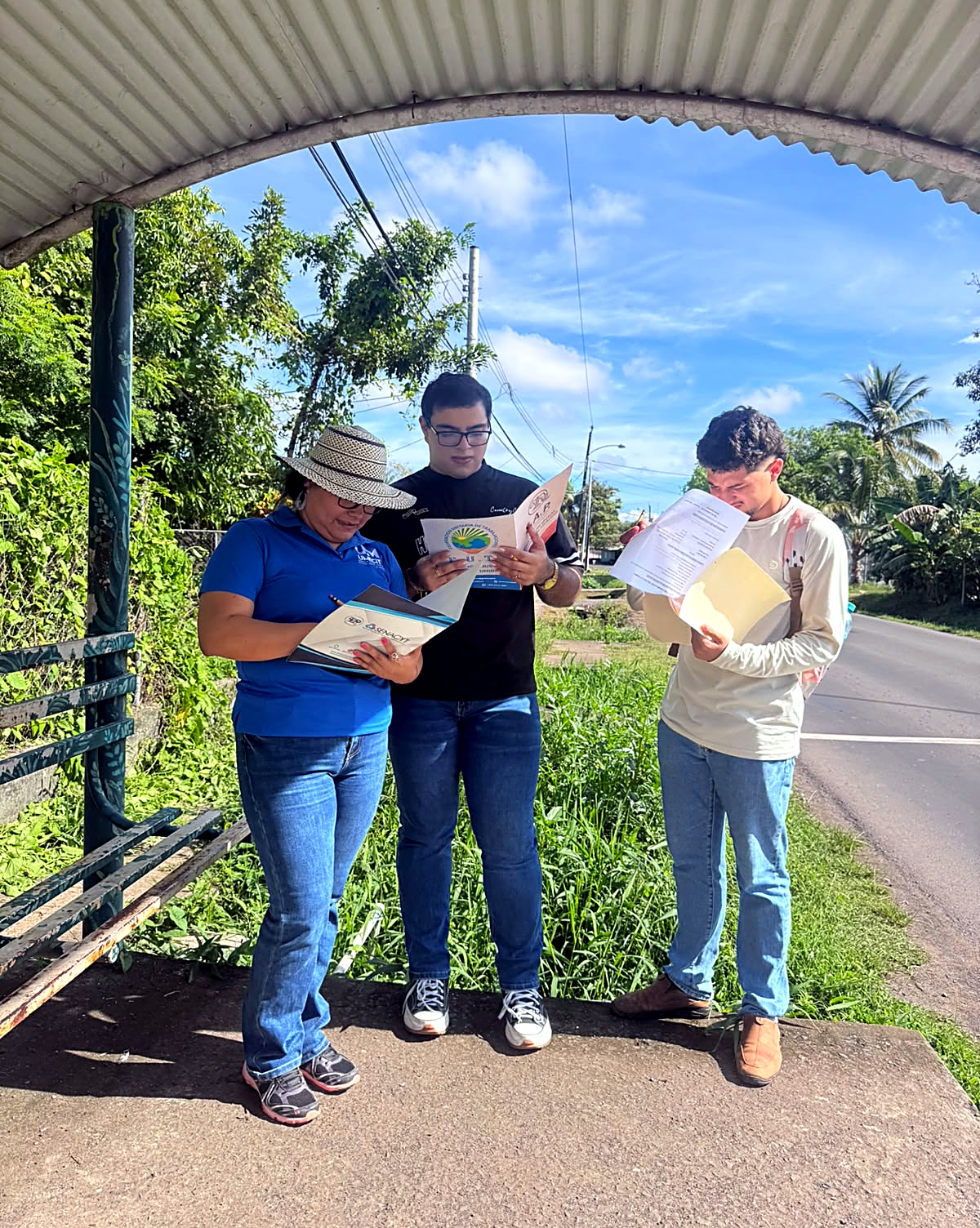
Research professor Zoila Chilán, along with students Jafeth Chacón and Norlando Reyes, from UMECIT Santiago campus, carried out a field work day as part of the research project "Impact of Pollution as an Environmental Crime in the Cuvíbora River, Nuevo Santiago district", aimed at studying the environmental conditions of this water resource and its possible legal implications.
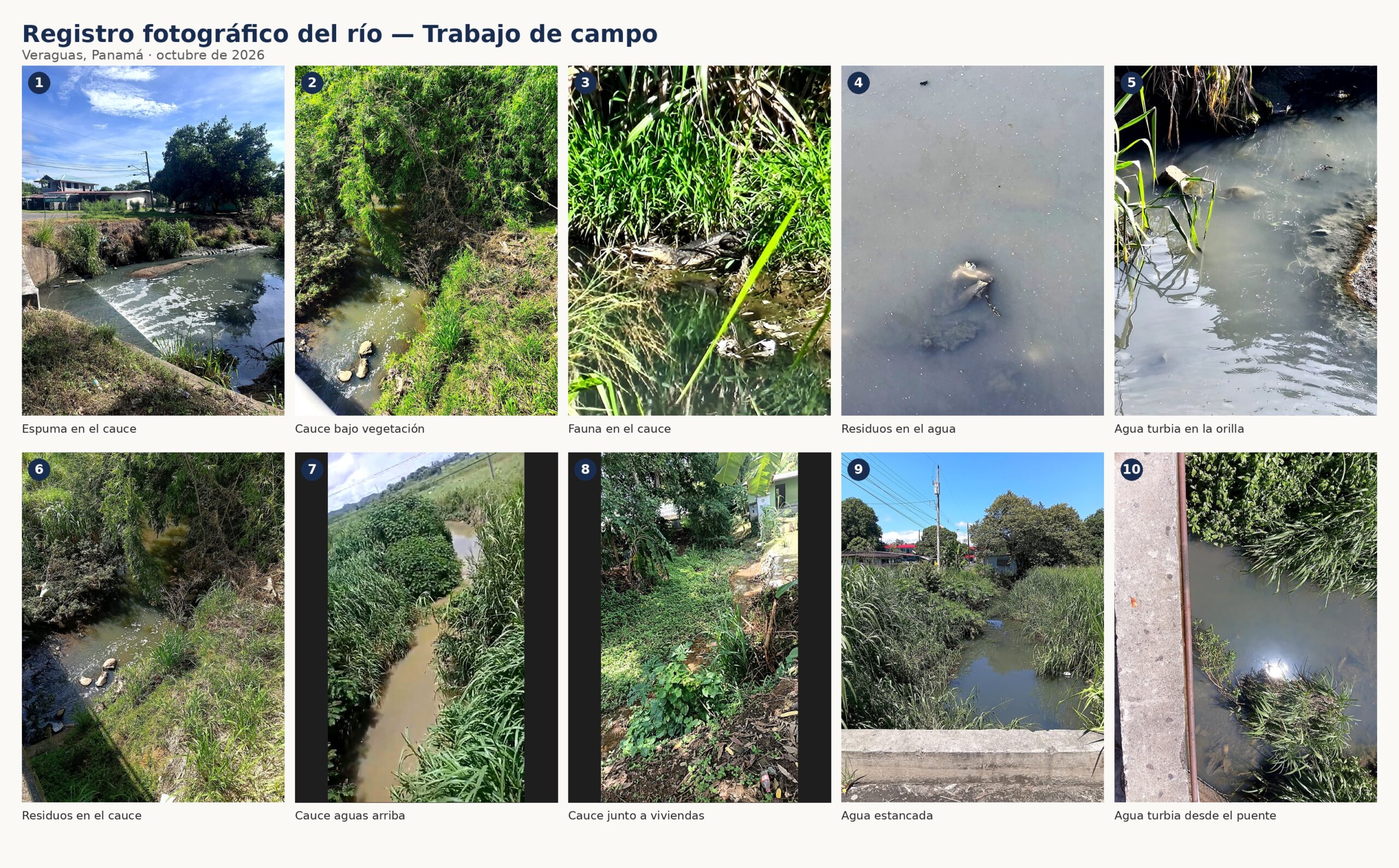
During the tour, the team visited various points along the riverbed in the Nuevo Santiago, San Martín de Porres, and Santiago sectors, including areas near homes and vehicular bridges. In these locations, they observed turbid water with grayish and brownish hues, the presence of foam, and an accumulation of solid waste, such as plastics, bottles, and containers, both in the river and on its banks.
Areas with stagnant water, abundant vegetation that impedes water flow, and the presence of wildlife were also identified. These observations are part of the field record that will allow for a more in-depth analysis of the ecosystem's conditions and the factors that may affect its conservation.
As part of the visit, the researchers toured the Regional Directorate of the Ministry of the Environment (MiAMBIENTE), where they were received by its regional director, Alejandra Blasser. During the meeting, they received technical and legal guidance from the legal department and the Water Resources Department, information that will contribute to the development of the next stages of the study.
The work allowed for the collection of photographic evidence, the expansion of available information, and the establishment of a relationship with environmental authorities. This input will be fundamental for comparing field observations with technical criteria and applicable regulations, without drawing premature conclusions about the existence of possible environmental crimes.
This research reflects UMECIT's commitment to generating knowledge related to community issues. It also promotes student participation in research processes that integrate direct observation, academic analysis, and institutional collaboration to contribute to the protection of natural resources.