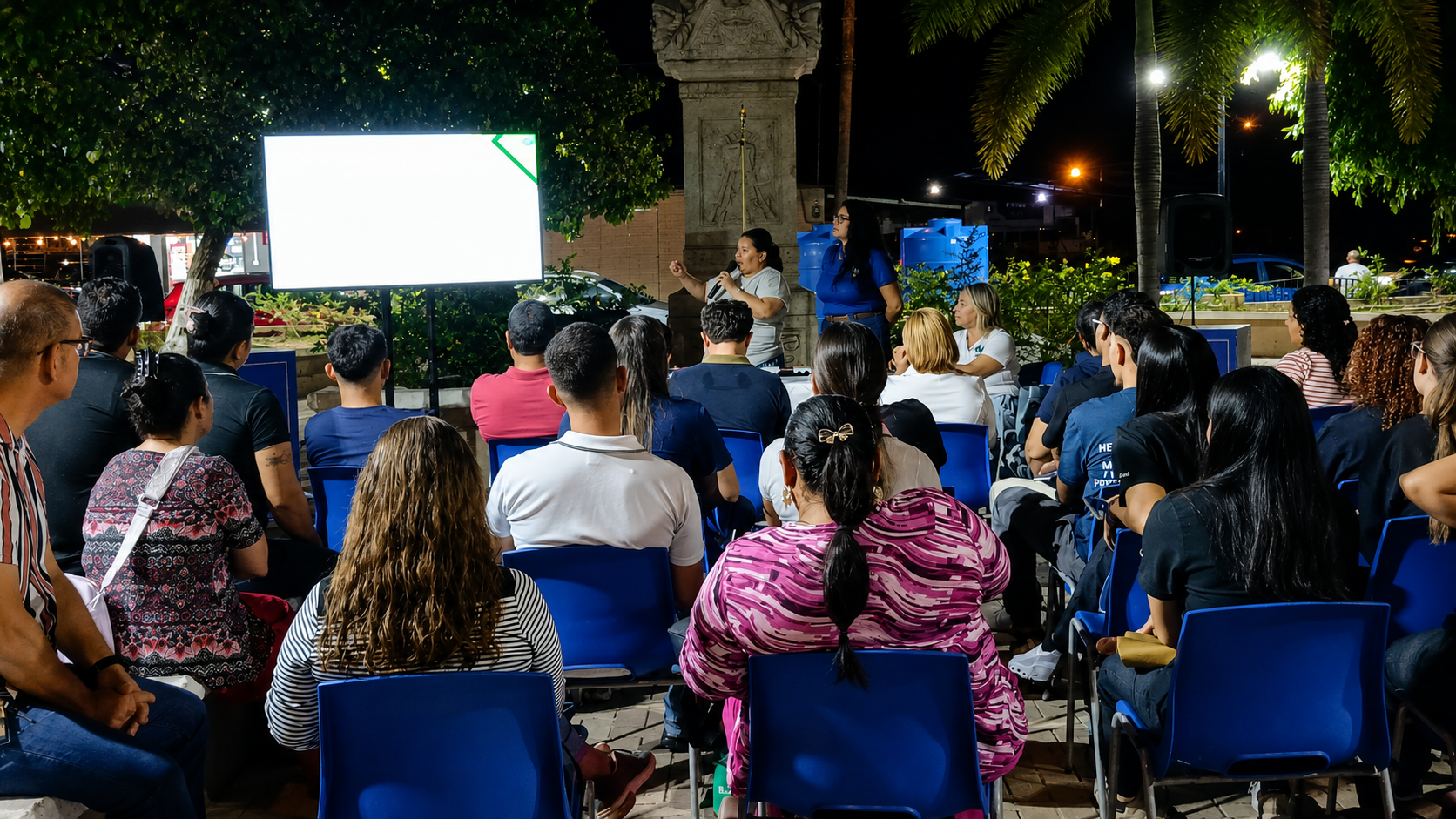
With the purpose of strengthening scientific dissemination and promoting spaces for reflection on environmental problems that directly impact the region, UMECIT Chitré Campus developed the discussion entitled "Water in Azuero: A vision from Science, with a social and citizen focus", an initiative aimed at sharing research results and generating contributions from academia in the face of the water crisis facing the region.
The activity brought together researchers, specialists, community leaders and representatives from various sectors interested in analyzing in a multidisciplinary way the deterioration of water sources in Azuero, particularly the situation associated with the pollution of the La Villa river, a problem that in recent years has significantly affected the water supply in the provinces of Herrera and Los Santos.
During the discussion, several scientific studies developed by UMECIT were presented, including:
- Effect of climate variations on agricultural production and tourism with current and future predictions (2026-2030) in the Azuero region, by teacher Osvaldo Solís.
- Innovative strategies for the sustainable treatment of technological waste: advances, challenges and perspectives, by Professor Guillermina Higuera.
- Territorial planning plan 2023-2030 for the Monagrillo district, by graduate Ángel Pérez
- The main morbidities associated with the intake of contaminated drinking water, presented by teacher Karen Botello, were the setting for a debate with community leaders concerned about the issue of water in Azuero.
These studies served as the basis for a participatory dialogue focused on identifying the structural causes of environmental pollution and proposing concrete actions that contribute to more sustainable water resource management. The need to translate scientific findings into preventative public policies that comprehensively address current environmental challenges was also emphasized.
Among the main approaches addressed during the meeting, the call to promote a paradigm shift in the face of the regional water crisis stood out, based on four fundamental pillars: agricultural sanitation, strategic reforestation, participatory governance and environmental territorial planning, in addition to the proper management of technological waste and the strengthening of environmental education as a tool for social transformation.
The discussion highlighted the importance of applied research as a tool for decision-making and the development of sustainable solutions, reaffirming UMECIT's commitment to science that is close to the communities, focused on responding to the needs of the environment and generating a positive impact on society.
With initiatives like this, UMECIT Chitré Campus strengthens its commitment to scientific research, environmental sustainability, and the link between academia and the community, promoting spaces for dialogue that contribute to the sustainable development of the Azuero region.