In higher education, inclusion is not limited to a statement of principles. It is realized in the conditions that the university establishes so that students can understand, participate in, and progress through their academic process.
At UMECIT, this commitment is developed from the identification of priority groups and the implementation of actions aimed at promoting their access, retention and academic progress, in accordance with a student-centered educational model.
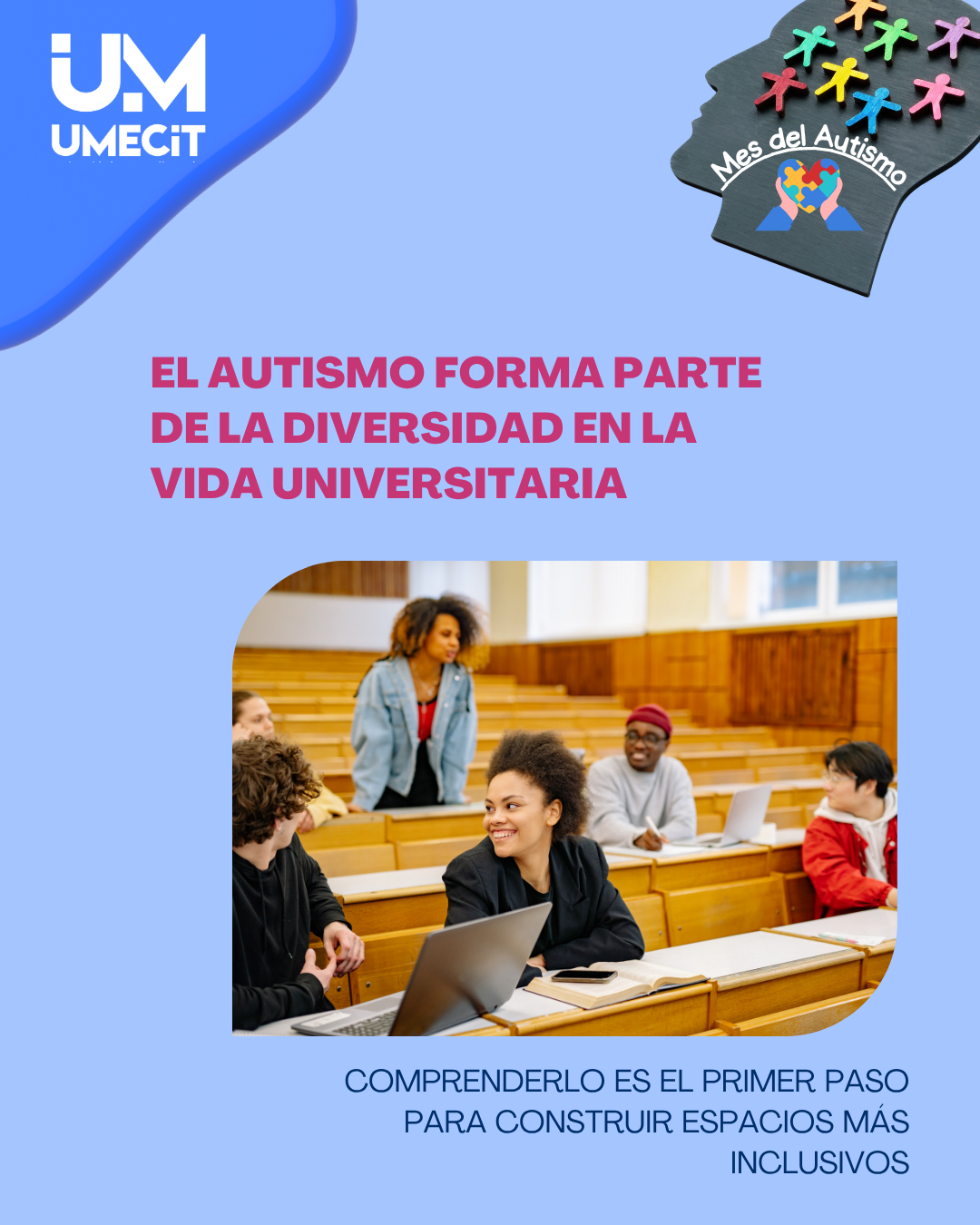
Diversity is an integral part of university life. It manifests itself in different ways of learning, interacting, and navigating the academic environment. Autism Spectrum Disorder, as part of this diversity, helps us understand that there is no single way to experience the educational process.
From this perspective, inclusion is not approached as an individual response, but as a practice incorporated into teaching. Clarity in instructions, organization of content, direct communication, and anticipation of activities are elements that promote learning and reduce uncertainty in the classroom.
This approach is based on institutional work, which allows for monitoring academic processes and maintaining consistency in actions that impact the student experience.
Likewise, the development of habits, responsibilities and skills that strengthen adaptation to university life and academic progress is promoted, understanding that inclusion also implies training for autonomy.
Each student has their own learning pace, strengths, and style. Recognizing this means avoiding generalizations and maintaining a structured, clear, and conscious approach to teaching.
In this sense, inclusion translates into practices that strengthen learning and prepare students to function in diverse environments with sound judgment and responsibility.